
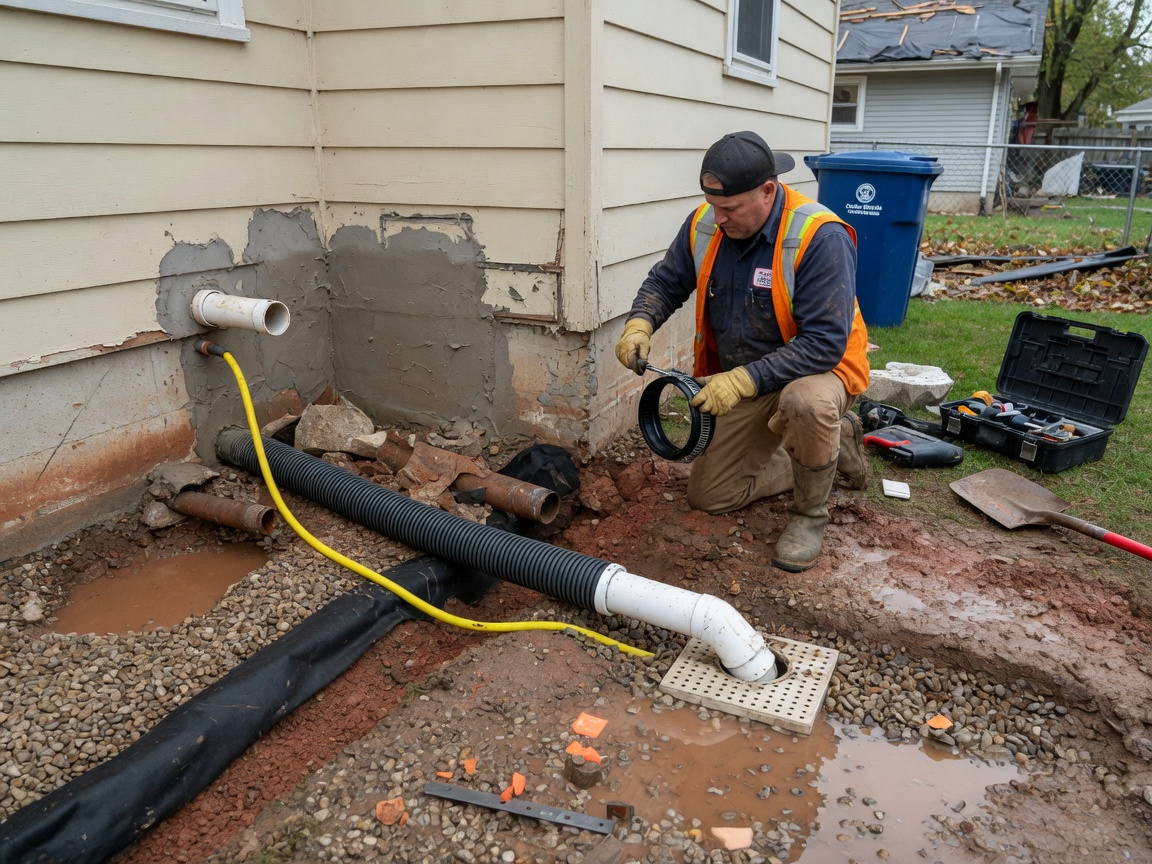
Cedar Rapids homes in neighborhoods like the NewBo District and Czech Village often feature older foundations from the early to mid-20th century that route sump discharge through clay or cast iron lines prone to cracking during our humid continental winters. When temperatures drop below freezing, standing water in these lines expands and splits joints, sending water back toward the foundation instead of out to the street or yard. Technicians at 3679 Mt Vernon Rd SE see this pattern repeatedly in Southeast Cedar Rapids where slight slopes and tight lot lines make proper re-routing difficult without disturbing established landscaping or sidewalks.
Heavy summer storms common to Linn County can overwhelm undersized or clogged discharge pipes that empty too close to the house or into shared drainage easements near Hawkeye Downs. In these cases the repair involves extending lines beyond the 10-foot minimum setback while maintaining positive pitch to prevent backflow. Northwest Cedar Rapids properties built on glacial till sometimes require additional cleanouts or check valves because soil movement shifts pipes over time and creates low spots that trap debris.
Homeowners in Downtown Cedar Rapids and near the Cedar Rapids Museum of Art frequently request repairs after noticing water pooling during spring thaws because original discharge routes were never updated when city storm sewers were modernized. Proper work includes verifying the line terminates at least 10 feet from any neighboring property line and confirming no cross-connection with sanitary lines, which remains a common code violation in Marion and Iowa City border homes as well.
Technician insight
In Cedar Rapids, the thing that catches most people out with Sump Pump Discharge and Drainage Repair is how quickly our freeze-thaw cycles split older cast iron or thin-wall PVC lines that were run too close to the house in Czech Village and NewBo District homes. The mistake homeowners make is assuming a simple extension will fix it when the real issue is often poor original pitch combined with clay-heavy Linn County soil that shifts every winter.
NewBo District Discharge Line Failure
Homeowner noticed water returning to the basement after a January thaw. Inspection found a cracked discharge line under the driveway that had split from repeated freezing. We replaced the damaged section with insulated PVC, added a check valve, and rerouted the termination farther from the foundation. Water now exits properly and no further basement moisture has occurred.
Sump Pump Discharge and Drainage Repair Services We Offer
✓Discharge Line Extension
Extend existing sump discharge piping to meet current setback requirements and prevent water from re-entering foundations in older Cedar Rapids neighborhoods.
✓Frozen or Cracked Pipe Repair
Replace sections of discharge line damaged by repeated freeze-thaw cycles common during Linn County winters, restoring proper flow away from the home.
✓Drainage Slope Correction
Re-grade or re-pipe discharge runs that have settled due to local soil conditions, eliminating low spots that trap water and cause backups.
✓Check Valve Installation
Add or replace check valves on discharge lines to stop reverse flow during heavy rains or when city storm systems back up near the NewBo District.
✓Buried Line Location and Repair
Locate and expose buried discharge piping that has failed under driveways or yards in Southeast Cedar Rapids, then repair without unnecessary excavation.
Sump Pump Discharge and Drainage Repair Cost in Cedar Rapids, IA
| Service | Typical Range | What Affects It |
|---|---|---|
| Discharge line extension | $350–$750 | Length of run and depth of burial affect final cost |
| Cracked pipe section replacement | $200–$450 | Access difficulty and material type change pricing |
| Check valve install or replacement | $125–$275 | Whether new valve or swap on existing line |
| Slope correction with re-pipe | $400–$850 | Extent of re-grading and any landscaping impact |
Ranges are typical for Cedar Rapids, IA and confirmed with an exact written quote before any work starts.
How it works
- 1
On-Site Assessment
Technician inspects the visible discharge line, tests pump operation, and traces the route from the home to its termination point using local lot records.
- 2
Problem Diagnosis
Pressure test or camera inspection identifies cracks, improper pitch, or freeze damage typical in Cedar Rapids clay soils and cold-weather exposure.
- 3
Targeted Repair
Replace or reroute affected sections with schedule 40 PVC, install new fittings or check valves, and restore positive drainage slope.
- 4
Final Verification
Run the pump through multiple cycles, confirm water exits at the correct distance from the foundation, and document the updated route for the homeowner.
Pricing
Upfront quotes provided after inspection at 3679 Mt Vernon Rd SE during Mon–Fri 8am–6pm or Sat 9am–2pm hours.